
Stress control


Stress control
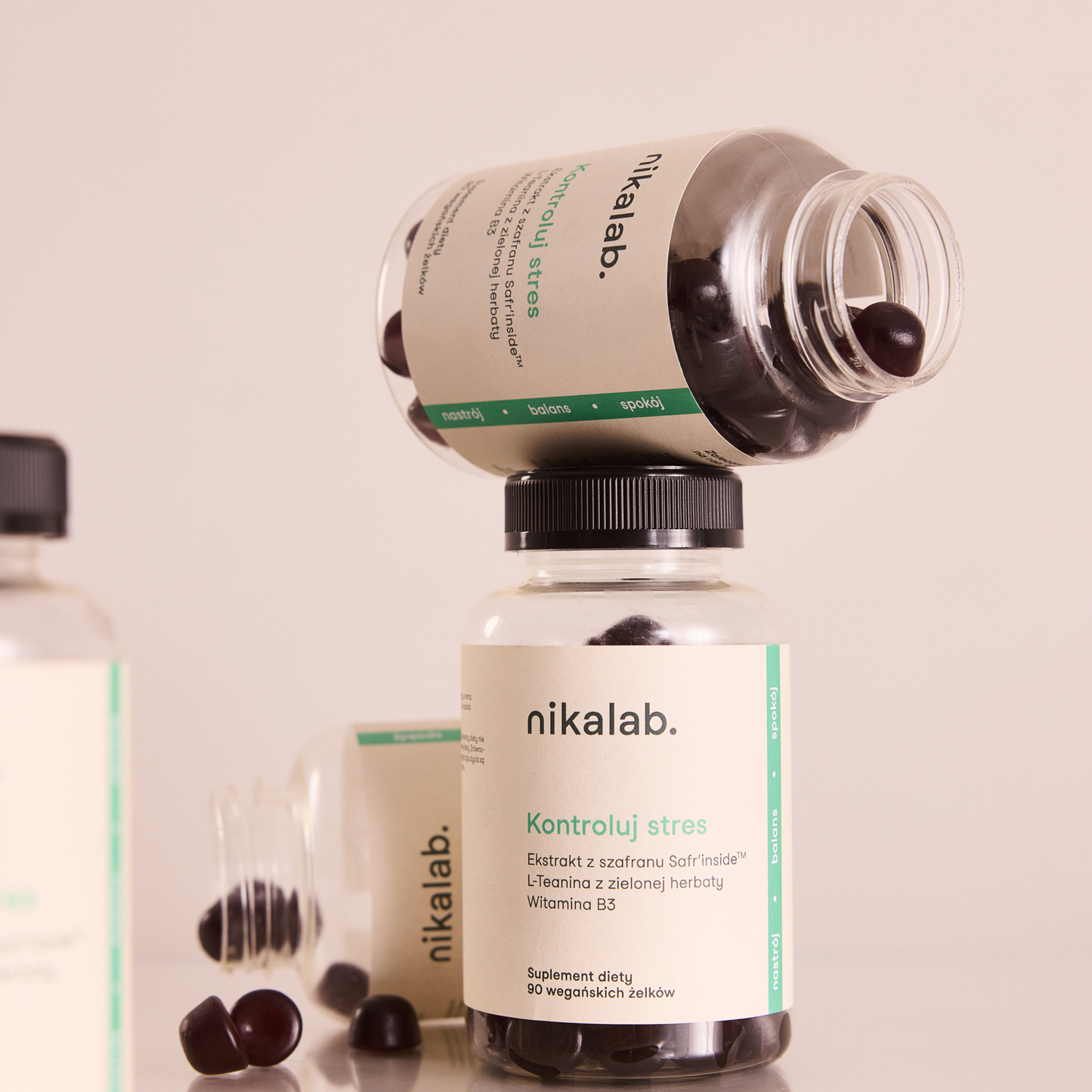
Innovative formula – a combination of three ingredients:
Results from Safr’insideTM manufacturer research:
- Regular price
- 199,99 zł
- Regular price
-
- Sale price
- 199,99 zł
- Unit price
- per
Couldn't load pickup availability

Oszczędzasz do 20% na każdym słoiczku
Darmowa dostawa od 150 zł (na terenie Polski)
Edytujesz lub rezygnujesz kiedy chcesz
Zamawiasz raz, a my dostarczamy regularnie
Dostawa 15 zł (na terenie Polski)



Pierwsze? Już za 30 minut.
Badanie producenta (ex-vivo) Safr’inside™ wykazało, że wspiera on równowagę neuroprzekaźników mózgowych odpowiedzialnych za nastrój i stan emocjonalny.
Wynik badań? Wzrost poziomu serotoniny(1).


BOOSTER SEROTONINY
Badanie producenta (ex-vivo) Safr’inside™ wykazało, że wspiera on równowagę neuroprzekaźników mózgowych odpowiedzialnych za nastrój i stan emocjonalny.
Wynik badań? Wzrost poziomu serotoniny(1).

NEUROPROTEKCJA
Badanie producenta (ex-vivo) Safr’inside™ wykazało, że zmniejsza on poziom wolnych rodników (ROS) wywołanych stresem oksydacyjnym, chroniąc neurony przed toksycznym działaniem stresu(1).

AKTYWACJA UKŁADU RELAKSACYJNEGO
Badanie producenta Safr’inside™ wykazało, że utrzymuje on równowagę układu nerwowego i zmienność rytmu serca w sytuacjach stresowych(2).
Działa w mniej niż 30 minut.

REGULACJA OSI JELITA-MÓZG
Badanie producenta Safr’inside™ wykazało, że zmniejsza on poziom lęku poprzez odbudowę zdrowej mikrobioty – szczególnie przez zwiększenie liczby bakterii Akkermansia(1).
Efekt prebiotyczny.

REGULACJA POZIOMU KORTYZOLU
Badanie producenta wykazało, że Safr’Inside™ i zawarty w nim safranal modulują biologiczną reakcję organizmu na stres(3). Podobne działanie wykazały badania producenta L-teaniny(8-10).
Szybka odpowiedź organizmu – w mniej niż 30 minut.

WŁAŚCIWOŚCI PRZECIWZAPALNE
Badanie producenta (ex-vivo) wykazało, że Safr’Inside™ ogranicza stan zapalny w komórkach jelit i stawów, wykazując ogólnoustrojowe działanie przeciwzapalne(3).

STABILNY UKŁAD NERWOWY I ENERGIA
Niacyna przyczynia się do prawidłowego funkcjonowania układu nerwowego(5) oraz funkcji psychologicznych(7). Przyczynia się też do zmniejszenia uczucia zmęczenia i znużenia(4) oraz do prawidłowego metabolizmu energetycznego(6).
LEPSZY SEN – BEZ SENNOŚCI W CIĄGU DNIA
Badanie producenta Safr’inside™ wykazało, że poprawia jakość snu, skraca czas zasypiania (o 35,4%) i wspiera nocną regenerację(11,12). W badaniach, ekstrakt z szafranu, uzyskał podobne efekty jak melatonina, ale bez skutków ubocznych typowych dla suplementacji hormonem snu(13).
Działa naturalnie, bez uzależnienia i bez efektu otępienia – wspiera wyciszenie wieczorem, a w ciągu dnia nie powoduje senności.
W CZASIE PMS
Badanie producenta ekstraktu z szafranu wykazało, że ekstrakt z szafranu łagodzi objawy takie jak drażliwość, napięcie i wahania nastroju(15).
Poprawa była widoczna już po dwóch cyklach.
W OKRESIE (PERI)MENOPAUZY
Badanie producenta ekstraktu z szafranu (trwające przez 12 tygodni) wykazało, że ekstrakt z szafranu istotnie zmniejsza objawy lęku i obniżonego nastroju u kobiet w okresie okołomenopauzalnym – o ponad 30% w porównaniu z placebo(16).
POPRAWA NASTROJU
Badanie producenta Safr’inside™ wykazało, że po 8 tygodniach stosowania Safr’Inside™ zaobserwowano zmniejszenie objawów depresyjnych w skali POMS.
Efekty były widoczne już po 6 tygodniach.

To działa.
Mówią Ci, którzy spróbowali.
Badanie producenta Safr'Inside™: 50 zdrowych dorosłych | 30 mg / dzień | 30 dni suplementacji.(14)


77%
osób deklaruje większy optymizm
75%
osób zauważyła poprawę równowagi emocjonalnej
50%
konsumentów odczuło poprawę jakości snu
Połączona moc 3 potężnych składników
 Safr’Inside™
 L-teanina
 Witamina B3 (niacyna)
Połączona moc 3 potężnych składników
Safr’Inside™
L-teanina
Witamina B3 (niacyna)
Kontroluj stres
Zalecane spożycie: 3 żelki dziennie, na raz, o dowolnej porze.
Składniki |
Forma chemiczna |
Ilość (w 3 żelkach) |
RWS (%) |
|---|---|---|---|
|
L-teanina (z ekstraktu z zielonej herbaty (Camellia sinensis (L.)) |
z ekstraktu z zielonej herbaty (Camellia sinensis (L.) | 200 mg | / |
|
Ekstrakt z szafranu Safr’Inside™ (Crocus sativus L. (kwiaty – znamię)) |
Crocus sativus L. (kwiaty – znamię) | 30 mg | / |
|
Witamina B3 (niacyna) (nikotynamid) |
nikotynamid | 16 mg | 100% |
Składniki
L-teanina
Ekstrakt z szafranu Safr’Inside™
Witamina B3 (niacyna)
Forma chemiczna
Ilość (w 3 żelkach)
RWS (%)
RWS (%) – referencyjna wartość spożycia
Wartość odżywcza (100 g / 3 żelki): wartość energetyczna 261 kcal / 19,58 kcal, tłuszcze (w tym nasycone) <0,5 g (<0,5 g) / <0,5 g (<0,5 g), węglowodany (w tym cukry) 43 g (39 g) / 3,23 g (2,93 g), błonnik 33 g / 2,48 g, białko 0,74 g / 0,06 g, sól 1,1 g / 0,08 g.
Pozostałe składniki: koncentrat soku jabłkowego, błonnik z tapioki, substancja żelująca (pektyna), regulator kwasowości (kwas cytrynowy), naturalny barwnik (marchewka, wiśnia), naturalny aromat (m.in. z czarnej porzeczki), substancja glazurująca (organiczny olej słonecznikowy, organiczny wosk karnauba).
Nie przekraczaj zalecanej dawki. Suplementy diety nie powinny być stosowane jako substytut zróżnicowanej diety. Zrównoważony sposób żywienia oraz prowadzenie zdrowego trybu życia są ważne dla prawidłowego funkcjonowania organizmu. Produkt przechowuj zamknięty, w temp. poniżej 21°C, w suchym i ciemnym miejscu oraz w sposób niedostępny dla małych dzieci.
Dlaczego nie używamy ashwagandhy?
Przeczytaj artykuł
Niewystarczające dowody naukowe
Ashwagandha robi dziś zawrotną karierę – w ostatnich latach trafiła do tysięcy suplementów diety w Europie i promowana jest jako naturalna odpowiedź na stres, zmęczenie, bezsenność czy spadki nastroju. Ale za tą popularnością nie idą wystarczające dowody naukowe, które potwierdzałyby skuteczność i bezpieczeństwo jej stosowania.
Dania ostrzega przed ashwagandhą
W 2020 roku, zgodnie z oceną Duńskiego Uniwersytetu Technicznego (DTU), ashwagandha została uznana za potencjalnie niebezpieczną, ponieważ może zaburzać gospodarkę hormonalną i funkcje rozrodcze zarówno u mężczyzn, jak i kobiet. Ponadto może negatywnie wpływać na metabolizm, układ odpornościowy oraz ośrodki układu nerwowego. Dania zaleciła wycofanie ashwagandhy z rynku. W odpowiedzi, w 2024 roku opublikowano raport przygotowany przez komitet ekspertów powołany przez indyjskie Ministerstwo AYUSH, mający na celu obronę bezpieczeństwa ashwagandhy. Dokument ten jednak nie spełnia standardów oceny klinicznej – opiera się na przeglądzie istniejących badań, bez weryfikacji ich jakości ani zastosowania rygorystycznej metodologii. Indie są jednym z największych eksporterów ashwagandhy do Europy, a jej pozycja gospodarcza i symboliczna ma tam ogromne znaczenie.
Ostrzeżenia z Niemiec
Równie poważne ostrzeżenia pochodzą z Niemiec. Już w 2013 roku Federalny Instytut Oceny Ryzyka (BfR) zwracał uwagę na brak danych toksykologicznych i zalecał rozważenie ograniczeń w stosowaniu ashwagandhy w żywności. W opinii opublikowanej ponownie w 2024 roku, BfR Ostrzega przed ryzykiem uszkodzenia wątroby oraz potencjalnym wpływem na układ hormonalny. Wskazano na szczególne zagrożenie dla dzieci, kobiet w ciąży i osób z chorobami wątroby. Jednocześnie podkreślono brak jednoznacznych dowodów potwierdzających deklarowane korzyści zdrowotne.
Islandia, Francja i kraje nordyckie – wspólne zastrzeżenia
Wątpliwości co do bezpieczeństwa ashwagandhy pojawiają się również w stanowiskach organów zdrowia publicznego w innych krajach europejskich, m.in. Islandii, Francji i krajach nordyckich, gdzie sugeruje się ograniczenie stosowania lub prowadzenie dalszych ocen ryzyka.
Niespełnione standardy
Na ten moment większość dostępnych badań nad ashwagandhą nie spełnia standardów, jakie stosuje się wobec składników mających działać na układ nerwowy czy hormonalny. Randomizowane badania kliniczne na ludziach są nieliczne, często przeprowadzone na małych grupach, z niejednorodnymi wynikami i słabą jakością metodologiczną.
Interakcje z innymi lekami
Ashwagandha może też wchodzić w interakcje z lekami uspokajającymi, przeciwlękowymi czy przeciwdrgawkowymi, nasilać skutki uboczne i wpływać na poziom hormonów płciowych – co jest przeciwwskazaniem m.in. przy chorobach tarczycy czy nowotworach hormonozależnych. Dopóki nie powstaną badania spełniające współczesne standardy kliniczne, Ashwagandha pozostaje składnikiem o nieweryfikowanym profilu bezpieczeństwa – z wieloma niewiadomymi, a potencjalnie poważnymi konsekwencjami zdrowotnymi.
Zamiast ashwagandhy – innowacyjna formuła, połączenie trzech składników: ekstrakt z szafranu Safr'Inside™, L-teanina z zielonej herbaty i witamina B3 (niacyna).
Poznaj nasze Bazy na co dzień:
kwasy Omega-3, witamina D3 oraz inne witaminy i minerały, dopasowane do etapu życia.


Uzupełnij w zależności od potrzeb o:


FAQ: najczęściej zadawane pytania
Kiedy można spodziewać się pierwszych zmian?
Czy żelki można stosować codziennie?
Czy produkt uzależnia lub powoduje senność w ciągu dnia?
Czy żelki Kontroluj Stres można łączyć z innymi produktami nikalab?
Czy produkt jest odpowiedni dla wegan?
Dlaczego nikalab nie stosuje ashwagandhy w swoich produktach?
Czy produkt można stosować w czasie menopauzy?
Czy produkt można stosować w okresie napięcia przedmiesiączkowego (PMS)?
Czy żelki Kontroluj stres pomogą przy dużym stresie emocjonalnym lub zawodowym?
Czy żelki Kontroluj stres można stosować zmagając się z depresją?
Na ile dni wystarcza jedno opakowanie żelków Kontroluj stres?
-
Monchaux De Oliveira, C., Pourtau, L., Vancassel, S., Pouchieu, C., Capuron, L., Gaudout, D., & Castanon, N. (2021). Saffron Extract-Induced Improvement of Depressive-Like Behavior in Mice Is Associated with Modulation of Monoaminergic Neurotransmission. Nutrients, 13(3), 904. https://doi.org/10.3390/nu13030904
-
Jackson PA, Forster J, Khan J, Pouchieu C, Dubreuil S, Gaudout D, Moras B, Pourtau L, Joffre F, Vaysse C, Bertrand K, Abrous H, Vauzour D, Brossaud J, Corcuff JB, Capuron L and Kennedy DO (2021) Effects of Saffron Extract Supplementation on Mood, Well-Being, and Response to a Psychosocial Stressor in Healthy Adults: A Randomized, Double-Blind, Parallel Group, Clinical Trial. Front. Nutr. 7:606124. doi: 10.3389/fnut.2020.606124
-
https://activinside.com/ingredients/safrinside/
-
EFSA. Niacin contributes to the reduction of tiredness and fatigue. POL-HC-6428
-
EFSA. Niacin contributes to normal functioning of the nervous system. POL-HC-6425
-
EFSA. Niacin contributes to normal energy-yielding metabolism. POL-HC-6424
-
EFSA. Niacin contributes to normal psychological function. POL-HC-6423
-
Evans, M., McDonald, A.C., Xiong, L. et al. A Randomized, Triple-Blind, Placebo-Controlled, Crossover Study to Investigate the Efficacy of a Single Dose of AlphaWave® l-Theanine on Stress in a Healthy Adult Population. Neurol Ther 10, 1061–1078 (2021). https://doi.org/10.1007/s40120-021-00284-x
-
Everett, J. M., Gunathilake, D., Dufficy, L., Roach, P. D., THOMAS, J., UPTON, D., & NAUMOVSKI, N. (2015).Theanine consumption, stress and anxiety in human clinical trials: a systematic review. 41-42. Abstract from 39th Annual Scientific Meeting of the Nutrition Society of Australia 2015, Wellington, New Zealand. https://doi.org/10.1016/j.jnim.2015.12.308
-
White, D. J., De Klerk, S., Woods, W., Gondalia, S., Noonan, C., & Scholey, A. B. (2016). Anti-Stress, Behavioural and Magnetoencephalography Effects of an l-Theanine-Based Nutrient Drink: A Randomised, Double-Blind, Placebo-Controlled, Crossover Trial. Nutrients, 8(1), 53. https://doi.org/10.3390/nu8010053
-
Pouchieu C, Pourtau L, Brossaud J, Gaudout D, Corcuff JB, Capuron L, Castanon N, Philip P. Acute Effect of a Saffron Extract (Safr'InsideTM) and Its Main Volatile Compound on the Stress Response in Healthy Young Men: A Randomized, Double Blind, Placebo-Controlled, Crossover Study. Nutrients. 2023 Jun 27;15(13):2921. doi: 10.3390/nu15132921. PMID: 37447245; PMCID: PMC10346743.
-
https://nutraceuticalbusinessreview.com/activinside-safrinside-saffron-extract-sleep-study
-
Lopresti AL, Smith SJ, Drummond PD. An investigation into an evening intake of a saffron extract (affron®) on sleep quality, cortisol, and melatonin concentrations in adults with poor sleep: a randomised, double-blind, placebo-controlled, multi-dose study. Sleep Med. 2021 Oct;86:7-18. doi: 10.1016/j.sleep.2021.08.001. Epub 2021 Aug 11. PMID: 34438361.
-
Test konsumencki na 50 zdrowych osobach dorosłych, 30 mg Safr’inside™ dziennie przez 30 dni.
-
Agha-Hosseini M, Kashani L, Aleyaseen A, Ghoreishi A, Rahmanpour H, Zarrinara AR, Akhondzadeh S. Crocus sativus L. (saffron) in the treatment of premenstrual syndrome: a double-blind, randomised and placebo-controlled trial. BJOG. 2008 Mar;115(4):515-9. doi: 10.1111/j.1471-0528.2007.01652.x. PMID: 18271889.
-
Lopresti AL, Smith SJ. The Effects of a Saffron Extract (affron®) on Menopausal Symptoms in Women during Perimenopause: A Randomised, Double-Blind, Placebo-Controlled Study. J Menopausal Med. 2021 Aug;27(2):66-78. doi: 10.6118/jmm.21002. PMID: 34463070; PMCID: PMC8408316.
-
Shahmansouri N, Farokhnia M, Abbasi SH, Kassaian SE, Noorbala Tafti AA, Gougol A, Yekehtaz H, Forghani S, Mahmoodian M, Saroukhani S, Arjmandi-Beglar A, Akhondzadeh S. A randomized, double-blind, clinical trial comparing the efficacy and safety of Crocus sativus L. with fluoxetine for improving mild to moderate depression in post percutaneous coronary intervention patients. J Affect Disord. 2014 Feb;155:216-22. doi: 10.1016/j.jad.2013.11.003. Epub 2013 Nov 16. PMID: 24289892.
-
Khalil, S.A. (2022). Saffron as a Treatment for Mild to Moderate Depression: A Revision of Current Literature Journal of European Psychology Students, 13(1), 1–6. https://doi.org/10.5334/jeps.529